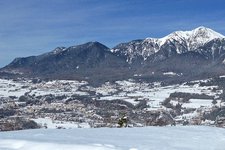
Only a few people live in Rover, a small but sunny hamlet of the municipality of Capriana
Image gallery: Rover
Rover was part of the autonomous municipality of Carbonare-Rover until 1925, when it became a hamlet of the municipality of Capriana together with Carbonare. In 1966, the village was evacuated for safety reasons after heavy rainfall and a landslide which destroyed a farm group on the right bank of the Avisio stream. One family returned to the village but 22 years later they had no choice but to move to another village for health reasons. The family members, however, returned to Rover to care for the house and the animals the other inhabitants left behind. As the hill was secured at the beginning of the 21st century, some families settled in Rover. The slope now offers ideal conditions for agriculture.
The walking and hiking paths in the surroundings of Rover are perfect for relaxing walks in nature. A 7.4-km long itinerary with 400 metres of elevation gain starts at the old farms of Capriana and takes you to Rover, Carbonare and the Mulino Museo della Beata Meneghina before returning to Capriana. The Mulino Museo della Beata Meneghina is an old mill and the birthplace of Maria Domenica Lazzeri, a mystic, which can now be visited.
The small St Anna church is the scene of the annually celebrated patron saint's festival. It was erected in 1959 by the will of Father Ignazio Zanol and the engineer Quadrio Curzio and built by the same craftsmen involved in the construction of the Stramentizzo dam. Giulio Deflorian, the owner of the furniture workshop Deflorian, and his daughter Mara take part in the project AbitaRover which has the aim to revitalise the hamlet of Rover. Hopefully, in the future people will return to live in this small but wonderful village only 3.5 km from Capriana.