Moena is the most populous village and administrative centre of the Val di Fassa


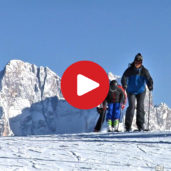

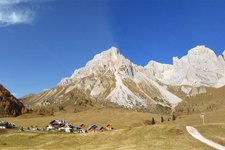
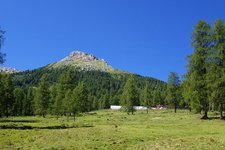
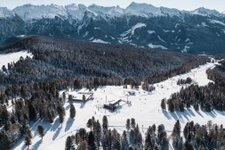
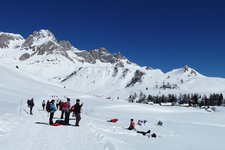
Embedded in a valley basin among the impressive peaks of the Dolomites, such as the Catinaccio, Mt. Sassolungo, the Monzoni and Mt. Latemar, the village of Moena is the gateway to the Val di Fassa and directly connected to the Val di Fiemme. Moena is situated in the vicinity of the ski area 'Tre Valli', complete with modern ski lifts and perfectly prepared slopes. The village is also the administrative centre of the eponymous municipality which includes the five hamlets Forno, Medil, Penia (or Peniola), Sorte and Someda. Moena is also known as the Fata delle Dolomiti (the fairy of the Dolomites) because of the wonderful light plays you can enjoy here at sunrise and sunset. Since 2011 it has been part of the Alpine Pearls, a denomination assigned to sustainable tourist destinations in the mountains. Thanks to its position amidst nature, this village is an ideal starting point for unforgettable MTB-tours to the surrounding peaks, mountain huts and pastures of the Alpe Lusia and the Passo San Pellegrino which turn into skiing areas in winter. If you love cheese, you should definitely try the Puzzone di Moena, a renowned cheese holding the protected designation of origin.
The municipality of Moena extends between 1,094 and 2,823 metres of altitude and the historic centre of Moena lies at 1,148 m a.s.l. Here, you will find several cultural gems. During a stroll across the centre you will pass old monuments, each one with its own history. The St Vigil parish church with its Gothic bell tower overlooks the centre from a hill. The church's current appearance is the result of several reconstructions and enlargements it underwent in the previous centuries. It was first consecrated in 1164, as testified by the painting above the main portal. In 1534, after being rebuilt in Gothic style, the church was consecrated for the third time. The final modifications were carried out in 1929. The interiors are decorated with several frescoes in Liberty style from the first half of the 20th century and works by the local painter Valentino Rovisi. Many decorations, including the window paintings and coffered wooden portals, were crafted by local artist Cirillo dell'Antonio. Right near the parish church stands the small St Wolfgang church built in the 15th century by the local architect Giovanni Guadagnini. It houses precious 15th century frescoes and a Baroque wooden ceiling. Between the two square-shaped windows above the portal you can recognise a circular and a cross-shaped hole. From the end of the 18th century until almost a century later, the church was not used any more. Luckily, it was rediscovered in the mid-19th century and the wooden bell tower was added.
The large Piazza de Sotegrava, one of the main squares of the historic centre, stands out for its historic buildings, bay windows, coloured windows and terraces decorated with flowers. Here stands the town hall of Moena, the Ciasa de Comun, a building coated in warm colours which also houses a library. We recommend visiting the Piazza Ramon, the other important square that takes you back in time. The old buildings and haylofts, the so-called tabiè, offer an immersive adventure in the past. Ciasa Ramon a 14th century monument, was rebuilt in masonry style only three centuries after its construction and houses two frescoes. The tabià Janac is a typical old building and Casa Chiochet shows frescoes from 1658 and paintings by the artist Forcellini. In the district rione Turchia you can admire some other tabiè worth mentioning, such as the tabià del Copeto dating back to 1693 and the tabià de Biada from 1586 which is open to the public during the festival of the district organised every year in August. The tabià del Bronza was built in 1576 and houses an exhibition on the fauna run by the local hunters. Moena is a perfect holiday destination for both people looking for a relaxing place in nature and sports enthusiasts.